
Monday, June 3, 2019

LA GUERRA DE LA INDEPENDENCIA; sangre pasión y lágrimas.

El tratado de Fontainebleau fue firmado entre Francia y españa, acordando dejar paso a las tropas españolas a través de España para entrar en Portugal. Pero las tropas francesas también invadieron España rompiendo el tratado.
¿Qué bandos se enfrentaron en la Guerra de la Independencia (1808-1814)?
Se enfrentaron el bando de los patriotas (españoles) contra el bando de los invasores (franceses).
¿Qué dos grupos integraban el bando "patriota"? ¿Qué los caracteriza?
Dentro del bando patriota había varios grupos: Absolutistas, liberales y afrancesados o carloterceristas. Aunque todos lucharon juntos contra los invasores, los primeros apoyaban la continuidad de la monarqía absoluta mientras que los seguntos deseaban acabar con ella. Y por último el tercer grupo que, enamorados de las nuevas políticas ilustradas, buscaban una transición entre la monquía absoluta y liberalismo siguiendo el modelo del despotismo ilustrado.
¿Qué significa la expresión "Viva Fernando y vamos robando"?
Por un lado el "Viva al rey" denota esa posición patriótica apoyando el regreso de Felipe VII. Mientras que "vamos robando" muestra esa vida de bandido y vandoleros que tenían que llevar para sobrevivir ya que no recibían paga y vivían de todo o que robaban en las reyertas.
¿Qué eran las guerrillas?
Las guerrillas eran grupos armados irregulares que atacaban por sorpresa al enemigo y se retiraban amparándose en el control del territorio.
¿Cuál fue el coste de la ayuda de Gran Bretaña?
Los ingleses intervinieron en la guerra de la independencia española por varias razones; por derrotar a Francia (su principal enemigo en ese momento), y por un interés económico. Mientras ayudaban en la lucha contra los franceses, iban destrozando la débil industria española, que si acaso prosperaba podría hacer peligrar el futuro de las exportaciones de paños y algodones británicas, que tenían en España un futuro prometedor. Además de la gran importancia de poderse beneficiar de las colonias españolas.
¿Qué medidas fueron aprobadas por las Cortes de Cádiz de 1810?
Las cortes de Cádiz acabaron con elabsolutismo y establecieron la división de poderes. Aprobaron también la abolición del régimen señorial y la suspensión de la Inquisición asentando las bases de un Estado Liberal influidas por las ideas ilustradas.
¿Qué batallas provocaron el final de la ocupación francesa en España?
Napoleón mandó 700.000 hombres a Rusia para intentar invadirla, lo que provocó una disminución del ejército frances en España. situacion que aprovechó el bando patriota junto con las ayudas inglesas y portuguesas para terminar con lainvasión Francesa en España.
La victoria de la batalla de Arapiles (Salamanca), en Julio, marcó el fin de Napoleón en España. Más tarde, tras las derrotas francesas en las batallas de Vitoria y de San Marcial (Irún) los franceses quedaron acorralados hasta los Pirineos. Entonces, para acabar con la presión bélica peninsular, Napoleón liberó a Fernando VII por el tratado de Valençay, poniendo fin a la ocupación francesa en España.
¿Qué consecuencias tuvo la guerra para España?
La contienda comportó grandes pérdidas: dejó un país debastado con una hacienda quebrada. Un gobierno inestable y una gran pérdida demográfica.
Además fue el principio del fin del Antiguo Régimen, del absolutismo y del señorialismo (un sistema económico que limitaba el desarrollo capitalista).
Y respecto al plano internacional, supuso el inicio de la pérdida del imperio de América y las colonias de ultramar y supuso el ocaso de España como protagonista del primer orden de Europa.
AMERICAN DECLARATION OF INDEPENDENCE, our own comment
American Declaration of Independence is a document that was approved by the Continental Congress on July 4, 1776, which declared the independence of the American Colonies from Britain.
I agree with Bernard Bailyn's interpretation: the Founding Fathers wrote the Declaration of Independence because of that fears and beliefs of the people: they believed in evil and deliberate conspiracy of Britain with evidence in the Samp act, coercive act and all those raises of taxes that were oppressing them. In fact, they start by saying: 'When in the course of human events it becomes necessary for one people to dissolve the political bands which have connected them with another and to assume among the powers of the earth...'.
At the same time, they tried to saw their belief that America was chosen by God to create a big and powerful nation based on those enlightenment ideas of liberty and freedom and to play a special role in the history: 'the foundation of a great and mighty empire, the largest the world ever saw to be founded on such principles of liberty and freedom, both civil and religious'.
I agree with Bernard Bailyn's interpretation: the Founding Fathers wrote the Declaration of Independence because of that fears and beliefs of the people: they believed in evil and deliberate conspiracy of Britain with evidence in the Samp act, coercive act and all those raises of taxes that were oppressing them. In fact, they start by saying: 'When in the course of human events it becomes necessary for one people to dissolve the political bands which have connected them with another and to assume among the powers of the earth...'.
At the same time, they tried to saw their belief that America was chosen by God to create a big and powerful nation based on those enlightenment ideas of liberty and freedom and to play a special role in the history: 'the foundation of a great and mighty empire, the largest the world ever saw to be founded on such principles of liberty and freedom, both civil and religious'.
Saturday, May 4, 2019
AMISTAD, THE MOVIE (1997) - QUESTIONNAIRE
What is the movie about? Summarize the plot of the film mentioning the main characters.

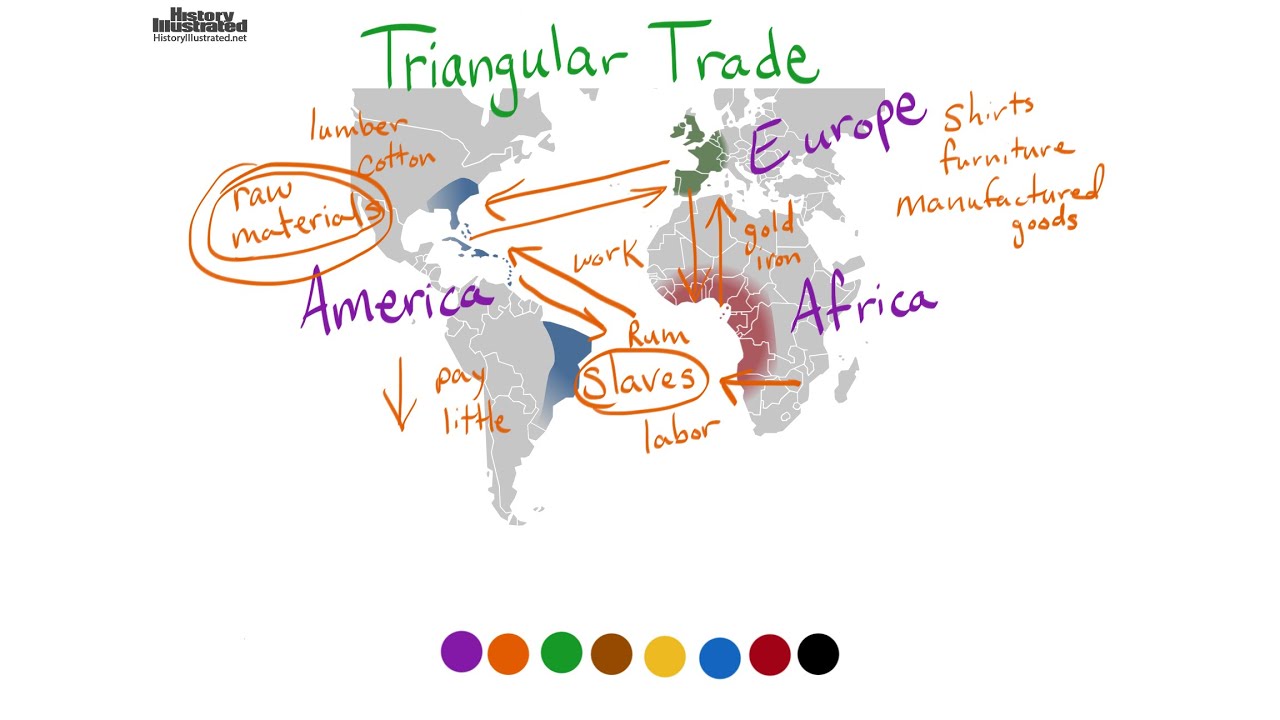
What was the Triangular Trade? What nations benefited from it?
It was a type of commerce that took place during the period of the colonialism. It is called "Triangular trade" indicating that shape of a triangle that creates the routes. From Europe, they were exported to Africa: shirts, furniture, manufactured goods. From Africa to America a large number of slaves and from America to Europe they exported raw materials. We can see that with these form of trade the principal benefited countries were; Spain, Great Britain, Portugal and North America while all the African and Central American colonies were heavily exploited.
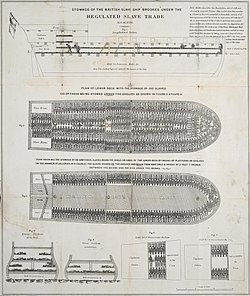
Blacks were kidnapped in Africa and put on the boats. As we can see in the image, they travelled in minimal spaces and without clothes, which produced a bad smell and poor hygiene, which is a great propensity for diseases.
Also, children and women were separated on one side, and men on the other. With chains in the neck and with insufficient food (only given to those who were perfectly healthy).
All this caused that 1 of every 5 blacks who were on board died, and those who died were thrown overboard.
Who was Joseph Cinqué? Did he really exist?
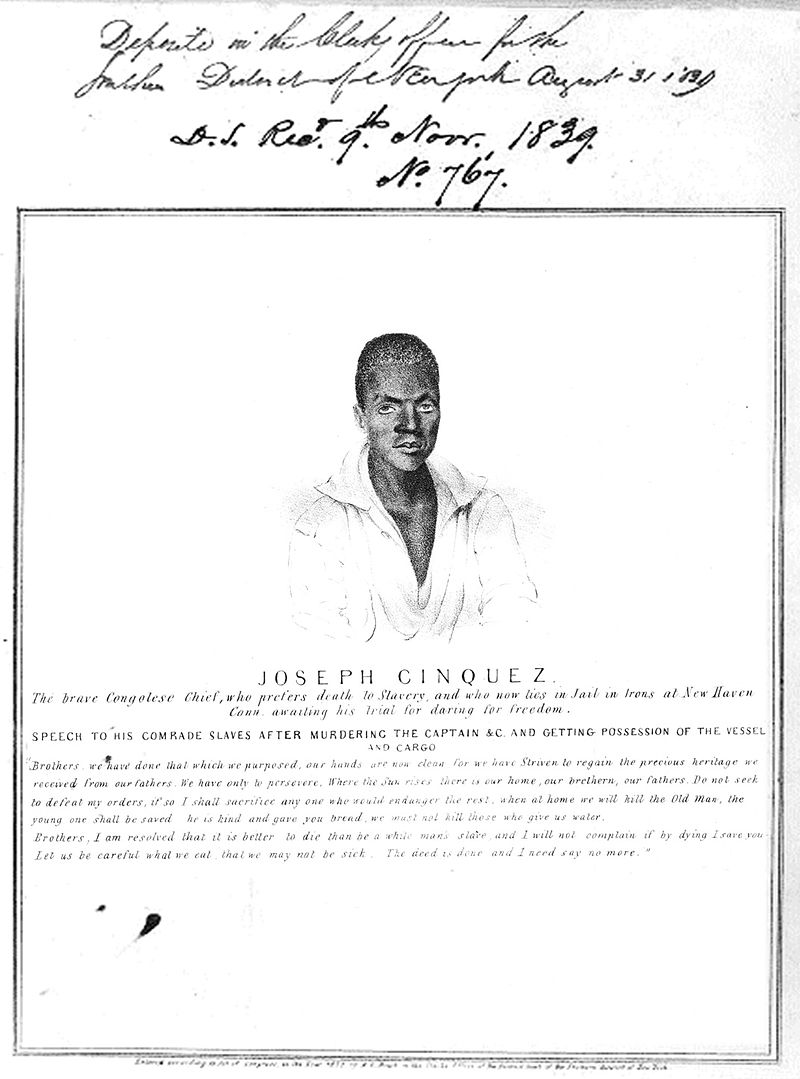
Joseph Cinqué was a black man known as Sengbe Pieh who lived in a village called Mende in Africa. As in the movie, he was imprisoned along with more people from the village and put on a black boat bound for America.
During the trip he was able to disengage from the chains and lead a revolt against the crew, taking the control of the ship.
What is the role of John Quincy Adams, former US President, in the movie?

"La Amistad" is the name of a Spanish ship that carried African black people to be slaves on America. During the travel, already close to the U.S., Cinqué leads a mutiny and takes over the ship killing practically the entire crew. But when they arrived in the U.S they were supposed to be runaway slaves from Cuba.
This film is about the slave dispute between being free or belonging to the two Spaniards in American courts and being slaves. Also that struggle between ideologies in favour of slavery and the new enlightened principles that were beginning to emerge around the world.
This film is about the slave dispute between being free or belonging to the two Spaniards in American courts and being slaves. Also that struggle between ideologies in favour of slavery and the new enlightened principles that were beginning to emerge around the world.
What was the Triangular Trade? What nations benefited from it?
It was a type of commerce that took place during the period of the colonialism. It is called "Triangular trade" indicating that shape of a triangle that creates the routes. From Europe, they were exported to Africa: shirts, furniture, manufactured goods. From Africa to America a large number of slaves and from America to Europe they exported raw materials. We can see that with these form of trade the principal benefited countries were; Spain, Great Britain, Portugal and North America while all the African and Central American colonies were heavily exploited.
Do some research and explain the conditions in which slaves were captured and transported from Africa to the Americas.
Blacks were kidnapped in Africa and put on the boats. As we can see in the image, they travelled in minimal spaces and without clothes, which produced a bad smell and poor hygiene, which is a great propensity for diseases.
Also, children and women were separated on one side, and men on the other. With chains in the neck and with insufficient food (only given to those who were perfectly healthy).
All this caused that 1 of every 5 blacks who were on board died, and those who died were thrown overboard.
What enlightened ideas appear in the movie?
The film 'Friendship', especially the final speech by John Quincy Adams, deals with many of the ideas of enlightenment and John Loke. Above all, we see that idea that God has created us all equal and with the same rights and that is how he sees us (without making distinctions between whites and blacks), based on that freedom and equality of 'The Natural state'.
Who was Joseph Cinqué? Did he really exist?
Joseph Cinqué was a black man known as Sengbe Pieh who lived in a village called Mende in Africa. As in the movie, he was imprisoned along with more people from the village and put on a black boat bound for America.
During the trip he was able to disengage from the chains and lead a revolt against the crew, taking the control of the ship.
What is the role of John Quincy Adams, former US President, in the movie?
In 1840 Lewis Tappan and Ellis Gray Loring of the Amistad Committee approached the 72-year old Adams to defend the Amistad captives. Initially hesitant, he eventually took the case believing it would be his last great service to the country. In February 1841 he argued the Mende were free men illegally captured and sold into slavery, and as such should be returned to Africa. After the Supreme Court ruled in favour of the captives Adams wrote his co-counsel, Roger Sherman Baldwin, saying, “The decision of the Supreme Court in the case of the Amistad has this moment been delivered by Judge Story. The captives are free...Yours in great haste and great joy.”
Saturday, March 9, 2019
Monday, January 14, 2019

Subscribe to:
Comments (Atom)
-
This is the graph of the imigrants that are living in our country. We can see that the more part of the imigrants arepeople from economic...
-
1. Summarize in a few lines the documentary. The documentary talks about the migration routs from South America to U.S.A. In it Jon Sist...
